
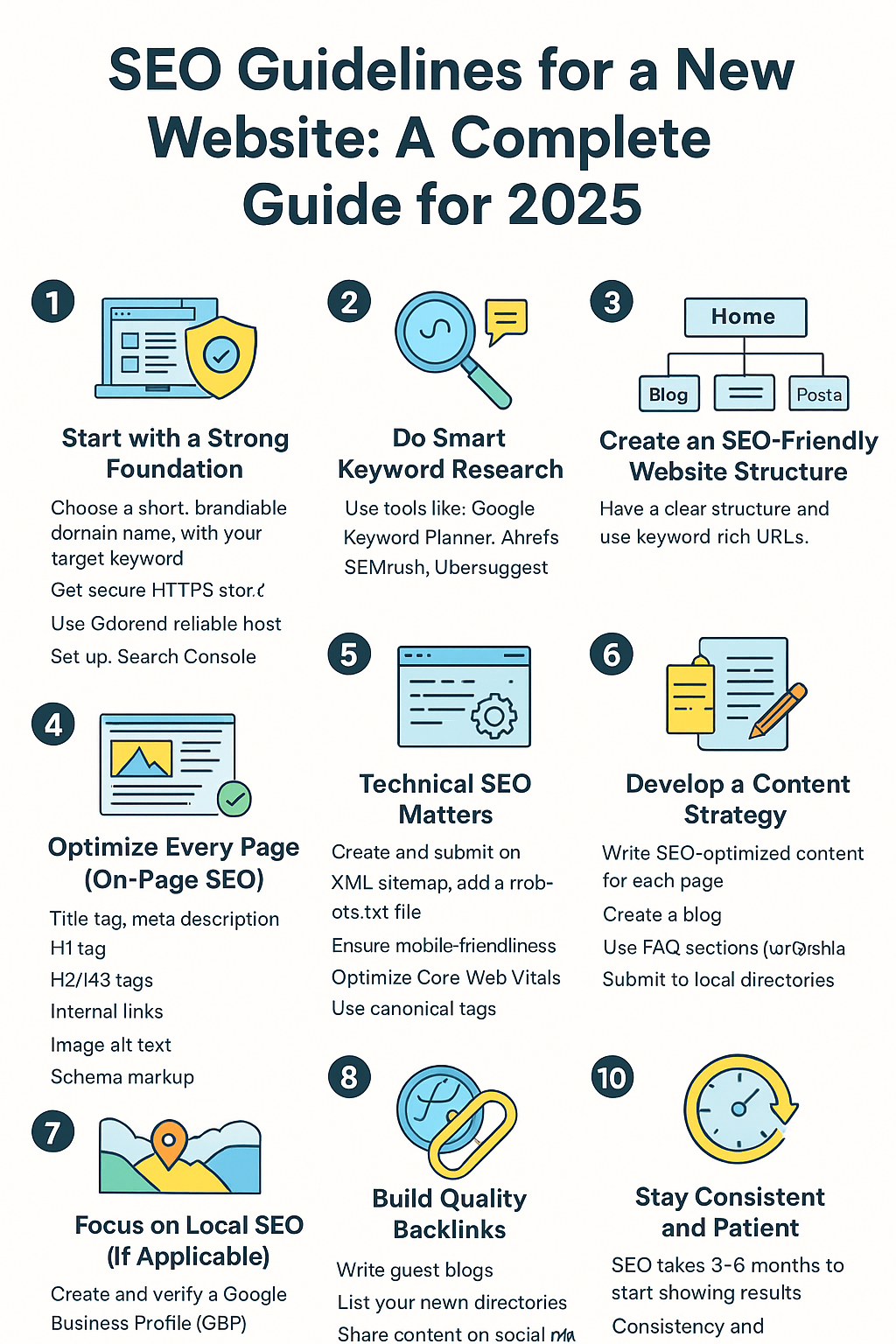
Launching a new website is exciting — but without the right SEO foundation, even a beautifully designed site can remain invisible on Google. Search engine optimization (SEO) is the key to getting found, attracting visitors, and building long-term online success.
In this guide, we’ll cover the most important SEO guidelines for a new website in 2025, step by step.
1. Start with a Strong Foundation
Before diving into keywords or backlinks, make sure your site’s base is strong.
- Choose a short, brandable domain that reflects your business.
- Get secure HTTPS hosting (Google favors secure sites).
- Pick a fast and reliable hosting server with good uptime.
- Set up Google Analytics 4 (GA4) and Google Search Console from day one — they’re essential for performance tracking and indexing.
A stable, fast, and secure website builds trust with both users and search engines.
2. Do Smart Keyword Research
Keyword research is the foundation of all SEO work. It tells you what your audience is searching for and how to structure your content.
Use tools like:
- Google Keyword Planner
- Ahrefs or SEMrush
- Ubersuggest
- AnswerThePublic
Look for:
- Primary keywords (main business terms like “solar installation San Jose”)
- Secondary keywords (related or support keywords)
- Long-tail keywords (specific, intent-driven phrases like “best solar panel installer near me”)
Target a mix of high-volume and low-competition keywords for faster ranking.
3. Create an SEO-Friendly Website Structure
Search engines prefer a clear and organized site structure. Plan your navigation like this:
Home → Services → Individual Service Pages
     → Blog → Categories → Individual Posts
Keep URLs short, readable, and keyword-rich.
Example:
✅ /solar-panel-installation-san-jose/
❌ /services?id=12
Also, add breadcrumbs to improve user experience and internal linking.
4. Optimize Every Page (On-Page SEO)
Each page should be properly optimized to target its focus keyword. Here’s the checklist:
- Title Tag: Under 60 characters, include your main keyword.
- Meta Description: Under 155 characters, summarize the page and add a call to action.
- H1 Tag: One per page with the target keyword.
- H2/H3 Tags: For subtopics and supporting terms.
- Internal Links: Link to related pages naturally.
- Image Alt Text: Describe images using keywords.
- Schema Markup: Add structured data (LocalBusiness, FAQ, etc.).
These details help Google understand your page content and context.
5. Technical SEO Matters
Technical SEO ensures that your website can be easily crawled and indexed by search engines.
- Create and submit an XML sitemap.
- Add a robots.txt file to control crawler access.
- Make your website mobile-friendly and responsive.
- Optimize Core Web Vitals (speed, interactivity, and visual stability).
- Use canonical tags to prevent duplicate content issues.
A technically sound website ranks better and provides a smoother user experience.
6. Develop a Content Strategy
Content is the heart of SEO. Create valuable, original, and informative content that answers your audience’s questions.
- Write 1000+ words for each service page.
- Start a blog for educational and keyword-targeted articles.
- Use FAQ sections with schema markup.
- Publish new posts regularly (at least 2 per month).
Search engines love fresh and relevant content, and it helps you attract organic backlinks naturally.
7. Focus on Local SEO (If Applicable)
If your business serves a specific area, local SEO is crucial.
- Create and verify your Google Business Profile (GBP).
- Use location-based keywords like “solar company in San Jose.”
- Add consistent NAP details (Name, Address, Phone Number) across your site and listings.
- Get listed in local directories like Yelp, Bing Places, and YellowPages.
Local SEO improves visibility in Google Maps and “near me” searches.
8. Build Quality Backlinks
After launch, start building authority through backlinks.
- Write guest blogs on industry sites.
- List your business on relevant directories.
- Share your content on social media.
- Avoid spammy or low-quality backlinks — they can hurt rankings.
Remember, quality > quantity when it comes to link building.
9. Track, Measure & Improve
SEO isn’t a one-time task. Monitor and improve continuously using tools like:
- Google Analytics 4 – to measure traffic and conversions.
- Search Console – to track keyword performance and indexing.
- Ahrefs / SEMrush – for backlinks and competitor analysis.
Regularly update old pages with new data, fix broken links, and refresh your content to stay relevant.
10. Stay Consistent and Patient
SEO takes time. A new website can take 3–6 months to start ranking steadily.
Keep publishing, optimizing, and improving — consistency is key to long-term results.
Final Thoughts
Creating a new website is just the beginning — optimizing it for search engines is what makes it visible to your customers.
Follow these SEO guidelines from the start to ensure your website not only looks great but also ranks well on Google.
If you need expert help in setting up or optimizing your new website for SEO, our team at AdnSEO Rank can help you plan and execute a complete SEO strategy for your brand.